
By Valerie Carsey
Edited by AI
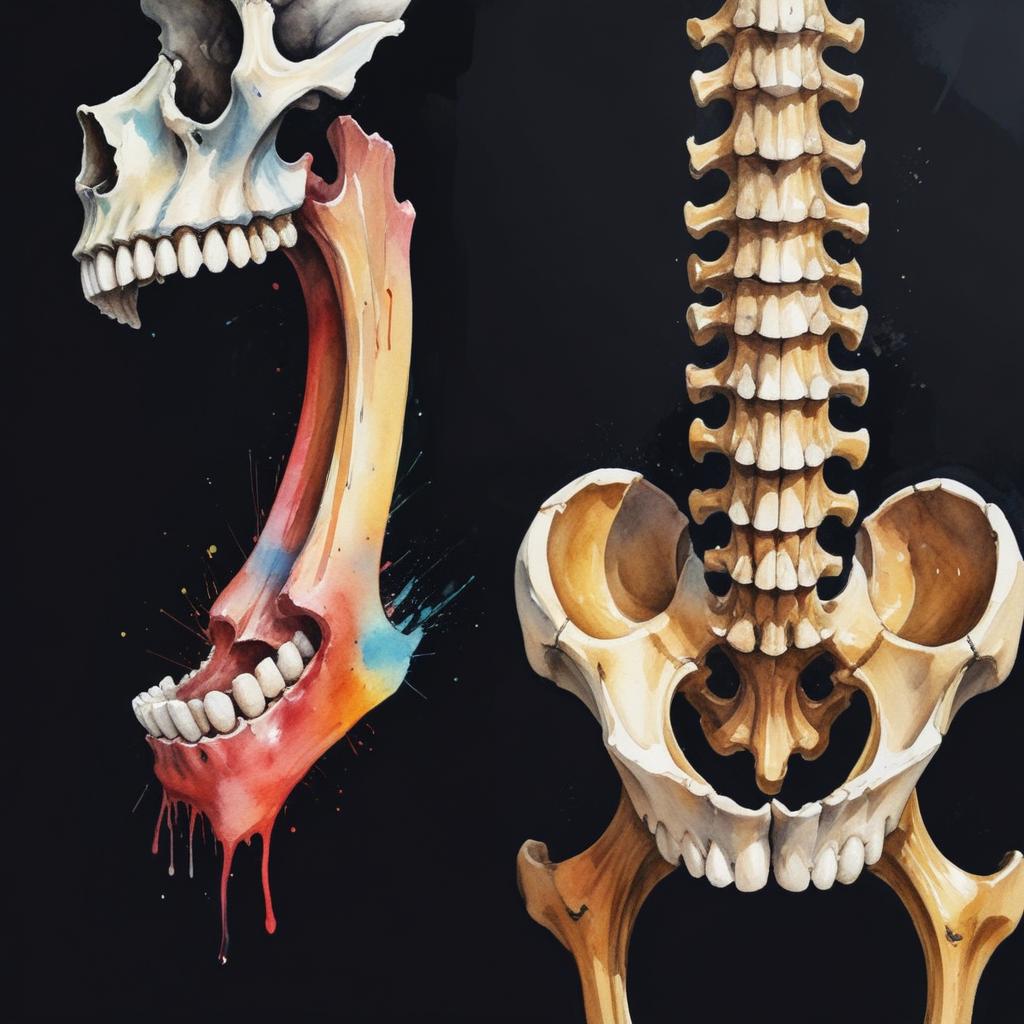
The interconnectedness of the human body is a concept that continues to fascinate both scientists and therapists alike. One area of growing interest is the potential relationship between the jaw and the pelvis, particularly how therapy targeting one area might influence the other. Here, I will delve into various theories and studies exploring the connection between the jaw and the pelvis, aiming to discern whether this relationship is grounded in science or more anecdotal in nature.
Theories and Observations
- Embryological Connection: One theory suggests a connection between the jaw and pelvis during the development of the human fetus. While embryological links can provide intriguing insights into how the body forms, this connection remains more of an interesting observation rather than a proven correlation.
- Structural Mirror Theory: Another claim posits that the shape of the larynx and vocal cords mirrors the shape of the pelvis. This, like the embryological connection, is an interesting observation but lacks evidence to prove a direct correlation.
- Acupuncture and Meridian Lines: In traditional Chinese medicine, it’s noted that the Gall Bladder meridian passes around the jaw and through the pelvis. While this could suggest a connection, the meridian’s pathway is more lateral to the hip, making the relationship less direct.
- CranioSacral System: The CranioSacral system, which at its core includes the head, spine, and sacrum, could theoretically link the jaw and pelvis through the dural tube (tissue that surrounds the spine and connects to the head and the pelvis). This connection is more general than specific. So, while the theory holds some merit, it still lacks conclusive evidence.
- Pressure Systems: This theory proposes that the pressure system between the mouth, diaphragm, and pelvis could link the jaw to the pelvis. This is by filling the lungs with air, holding the breath, and thus contracting the pelvis. This is supported by the use of breathwork in pelvic floor therapies, although the direct connection to the jaw remains speculative.
- Fascial Connections: The fascia, which are connective tissues enveloping muscles, bones, and organs, might provide a tangible connection between the jaw and pelvis. According to Anatomy Trains, two fascial chains—the Deep Front Line and the Superficial Front Line—do link these areas, offering a possible explanation for a correlation. (2)
- Vagus Nerve: (3) The vagus nerve (Cranial Nerve X) starts at the brainstem and travels through the jugular foramen, extending from the neck and back of the tongue down to the uterus in the pelvis, hinting at a possible connection between these areas. It plays a crucial role in the parasympathetic nervous system, helping to keep the body calm and functioning smoothly. However, when the body enters “fight, flight, or freeze” mode, the sympathetic nervous system takes over, suppressing the vagus nerve’s calming effects. This can lead to physical responses such as teeth clenching or bladder and bowel dysfunction during moments of high stress or fear. It’s important to note that the jaw and pelvis may show tension independently or simultaneously due to the vagus nerve’s involvement in the stress response. There is a clear relationship between the vagus nerve, the mouth, and sexual function. Notably, one study described four women with severed spinal cords who were still able to achieve orgasm via the vagus nerve. (4)
Additional Findings
I found a significant connection between the jaw, pelvis, and posture, specifically related to spinal rotation. (5, 6, 7) One study found that improving spinal rotation also alleviated pelvic tilt and jaw pain. Both posture and dental bite directly influence the jaw, and when the spine is misaligned or rotated, the pelvis can also be affected, leading to muscle strain. Although the connection was not directly between the jaw and pelvis, both were correlated with spinal alignment and rotation.
I spoke with Laura Evans, PT, DPT, OCS, from Therapeutic Associates Bethany Physical Therapy, who noted, “If a patient comes in with pelvic pain, I conduct a subjective screening to determine if TMD (temporomandibular joint dysfunction) might be a factor. If so, I educate them on head and tongue posture and sometimes on TMD specifically.”
One study I found linked jaw tension to women with endometriosis. (8) The theory suggested that endometriosis pain manifested as jaw tension, grinding, or clenching, but loosening the jaw did not reduce endometriosis symptoms, and the reverse scenario was not explored.
Another case study described a woman whose sexual pain disappeared after mouth surgery, though this was the only instance I found suggesting a possible correlation. (9)
However, a study published in 2013 concluded that there was no statistical correlation between working on the jaw and affecting the pelvis. (10) It did note that participants with both temporomandibular joint dysfunction and pelvic setting disorder had more than a 2 cm difference in lateral flexion and twist of the cervical spine. They also showed a difference in the relative and absolute length of the legs of 2 cm or more. It’s important to consider that the study group was small, with only 36 participants.
Conclusion
Despite various theories and observations, there is no statistically conclusive evidence supporting a direct correlation between the jaw and pelvis. However, posture and the role of the spine may be critical factors influencing both areas. While the relationship remains complex and not fully understood, ongoing research and holistic approaches to therapy continue to explore this fascinating area of the human body
References
1. Keller, Laura. Jaw and Pelvic Floor Connection. Dr. Lauren Keller, Chiropractor. May 24, 2022 https://drlaurenkeller.com/blog/2022/5/23/5xlrzq50dx7n127nsavetabxr7jseg
2. Sabina Tim, Agnieszka I. Mazurka-Bialy, The Most Common Functional Disorders and Factors Affecting Female Pelvic Floor. Life(Basel). 2021 Dec; 11(12) 1397. Published online 2021 Dec 14. Doi: : 10.3390/life11121397
3. Ibrahim Alkatout, Thilo Wedel, Julian Pape, Marc Passover, Judi Dhanawat, Review: Pelvic nerves – from anatomy and physiology to clinical applications. Transl Neurosci, 2021 Jan 1; 12(1): 362-378. Published online 2021 Oct 8. 10.1515/tnsci-2020-
4. Barry R. Komisaruk, Beverly Whipple, Audrita Crawford, Sherry Grimes, Wen-Ching Liu, Andrew Kalnin, Kristine Mosier, Brain activation during vaginocervical self-stimulation and orgasm in women with complete spinal cord injury: MRI evidence of mediation by the Vagus nerves. Brain Research Volume 1024, Issues 1-2, 22 October 2004, Pages 77-88 https://doi.org/10.1016/j.brainres.2004.07.029
5. Eliza Tiemi Saito, Paula Marie Hanai Akashi, Isabel de Camargo Neves Sacco, Global body posture evaluation in patients with temporomandibular joint disorder. Clinics (San Paulo). 2009;64(1):35-9. Doi: 10.1590/s1807-5932200900010007.
6. Yongnam Park, PT, Youngsook Bae, PT, Change of Range of Motion of the Temporomandibular Joint after Correction of Mild Scoliosis. J Phys Ther Sci. 2014 Aug; 26(8): 1157-1160. Published online 2014 Aug 30. Doi: 10.1589/jpts.26.1157
7. Carsten Lippold; Gholamreza Danesh; Gloria Hoppe; Burkhard Drerup; Lars Hackenberg, Trunk Inclination, Pelvic Tilt and Pelvic Rotation in Relation to the Craniofacial Morphology in. Adults. The Angle orthodontist, Angle Orthod (2007) 77 (1): 29-35, January 1, 2007. https://doi.org/10.2319/121205-434R.1
8. Malgorzata Wojcik, Tomasz Gozdziewicz, Zuzana Hudakova, Idzi Siatkowski, Endometriosis and the Temporomandiubular Joint – Preliminary Observations. J Clin Med. 2023 Apr; 12(8): 2862. Published online 2023 Apr 14. Doi: 10.3390/jcm12082862
9. Guan, Jennifer PT, DPT, MA. Ankyloglossia, a Contributor to Pelvic Pain: A Case Report. Journal of Women’s & Pelvic Health Physical Therapy 47(4):p 271-277, October/December 2023. | DOI: 10.1097/JWH.0000000000000284
Kulesa-Mrowiecka M., Sycz P., Lyznawska J., Jaworek M., Manko G., Brzostek M., Assessment of temporomandibular joint dysfunctions and the position of pelvis. J Orthopedic Trauma Surg Rel Res 3 (33) 2013 https://www.researchgate.net/profile/Monika-Cyran/publication/286123307_Assessment_of_mobility_and_quality_of_life_of_patients_with_myelomeningocele/links/59d43ae6aca2721f436cec5e/Assessment-of-mobility-and-quality-of-life-of-patients-with-myelomeningocele.pdf?origin=journalDetail&_tp=eyJwYWdlIjoiam91cm5hbERldGFpbCJ9

 Valerie Carsey, LLC